 Hardware × Intelligence
Research for machines that sense, decide and act.
Robotics · Drones · Surveillance · Smart hardware · Security
We research robots, drones and smart sensing that help keep people safe: finding those in danger, protecting important places, and doing work that is too risky for people.
01
Robotics
02
Drones & Counter-Drone
03
Surveillance
04
Smart Hardware
05
Security
Our thesis
Hardware, software and AI are researched together, by one team, in one lab.
The hardest problems sit where physical systems meet intelligence. That is where we choose to work.
Research areas
What we research
Five areas, each with a clear purpose. We share what our research is for; how it works stays inside the lab and is discussed only with partners under agreement.
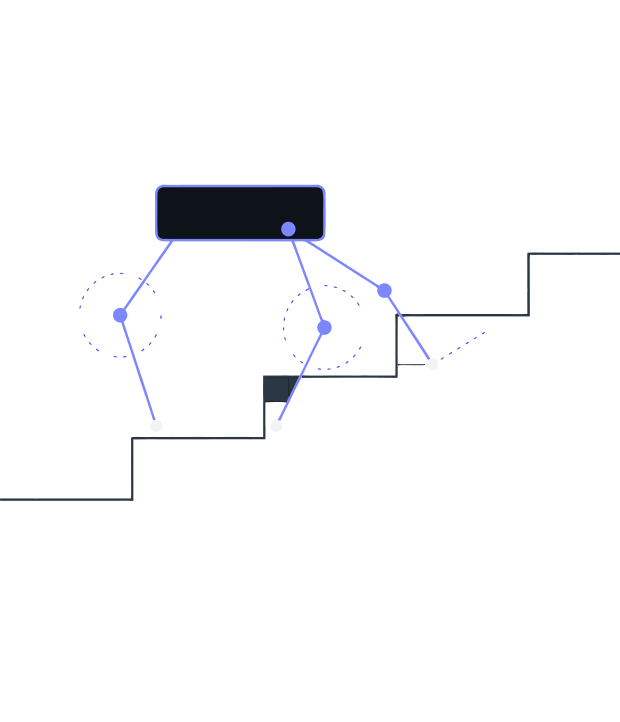
01 / Robotics
Robots for places people can't easily go
We research ground robots that take on heavy, risky or repetitive work, so people don't have to.
Climbing robots
Carry goods up stairs and across rough, uneven ground.
Inspection robots
Enter hazardous or confined areas and report back safely.
Warehouse robots
Move materials around sites with less manual handling.
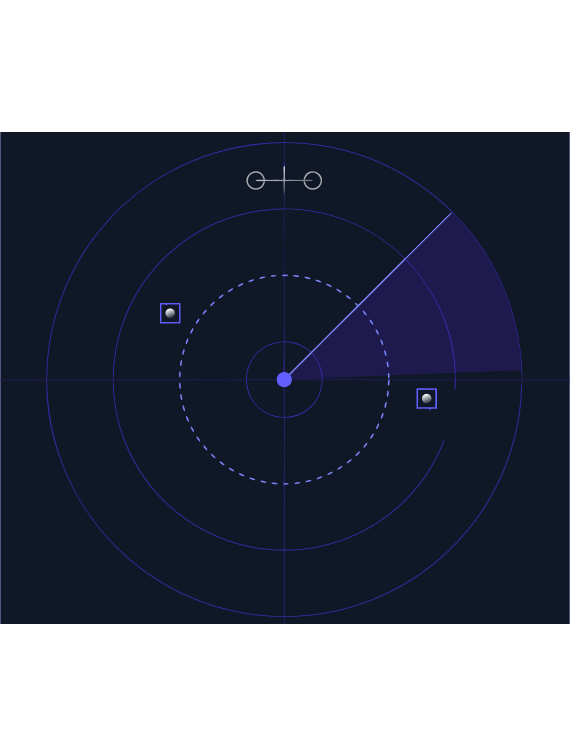
02 / Drones & Counter-Drone
Drones for real missions, and protection from unwanted ones
We research drones that help in the field, and ways to keep sensitive sites safe from drones that shouldn't be there.
Mission drones
Support search and rescue, disaster response, traffic monitoring and farming.
Drone detection
Spot unwanted drones near airports, borders, prisons and public events.
Airspace protection
Help secure critical sites, with people always making the final call.

03 / Surveillance
Finding people and threats that can't be seen
We research ways to detect people and dangers that are hidden from normal view.
See behind walls
Detect people behind walls or under rubble, for rescue and security teams.
Hidden threat detection
Find concealed or buried objects that could put lives at risk.
Low-visibility sensing
Keep watch in darkness, smoke and bad weather.
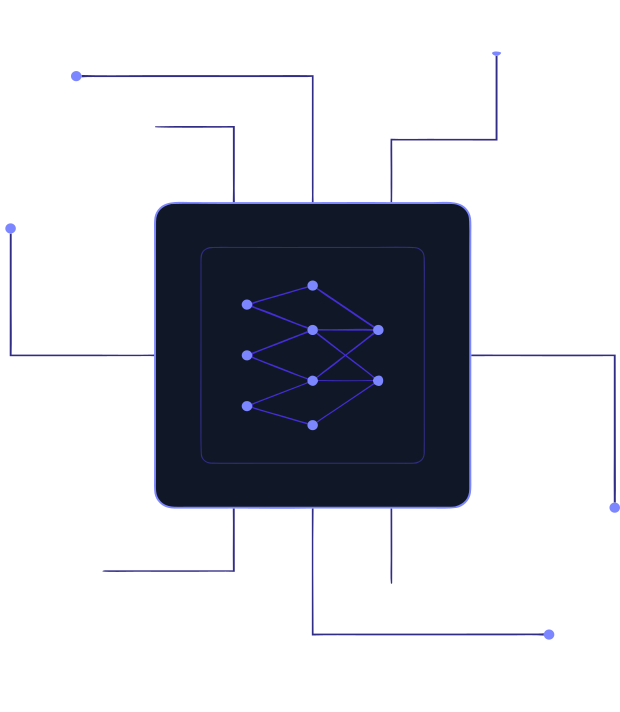
04 / Smart Hardware
Devices that think for themselves in the field
We research compact hardware that makes decisions on the spot, without needing the internet or a remote operator.
On-board decisions
Machines that react instantly, even with no network connection.
Wearable devices
Small, lightweight tools that responders can carry or wear.
In-house control hardware
Our own control electronics, designed and built in the lab.

05 / Security
Machines that can't easily be hacked or hijacked
We research how to keep robots, drones and devices safe from tampering and interference.
Secure communication
Keep the link between a machine and its operator protected.
Tamper protection
Stop anyone from taking control of a machine they shouldn't.
Fail-safe behaviour
Make sure a machine stays safe if something goes wrong.
Research maturity
From first principle to field
We use the technology readiness scale to plan our work and be clear with partners about where an idea stands.
TRL 1
Basic principles observed
TRL 2
Concept formulated
TRL 3
Proof of concept
TRL 4
Validated in the lab
TRL 5
Validated in a relevant setting
TRL 6
Prototype demonstrated
TRL 7
Demonstrated in operation
TRL 8
System qualified
TRL 9
Proven in the field
Research
Explore the question, test assumptions and validate early ideas in the lab.
Prototype
Integrate what works into builds tested in realistic settings.
Field
Harden, qualify and prove the system where it will be used.
R&D as a Service
Your idea. Our lab.
Have an idea in robotics, drones or a similar hardware-plus-AI space? We run the design, prototyping, testing and iteration in-house, so you get a working build without setting up that capability yourself.
End-to-end development
From concept to working prototype for robotics, drones and sensing hardware.
An in-house lab and team
An R&D lab and engineering team built to take an idea from first sketch to a working build.
Integrated capability
Hardware, software and AI, developed side by side.
Scoped to your idea
Engagements sized to what you need, from a feasibility study to a field-ready build.
Phase 1
Feasibility
Understand the idea, test the key assumptions and agree what success looks like.
Phase 2
Design
Shape the whole system together, from hardware to intelligence.
Phase 3
Prototype
Build, test and iterate in our lab until the build does what it should.
Phase 4
Field-ready
Prove it in realistic conditions and refine it for real-world use.
How we research
Principles of the lab
Whole-system thinking
Software, sensing and hardware are researched together by one team.
Evidence before claims
Ideas are tested rigorously before we build on them.
People in control
Every system keeps a human informed and accountable, within applicable regulation.
Rooted locally
Led from Siliguri, building engineering talent in the Eastern Himalayan region.
Bring us a hard problem. We'll help you find out what it takes.
Get in TouchContact Us
Offices
| | |