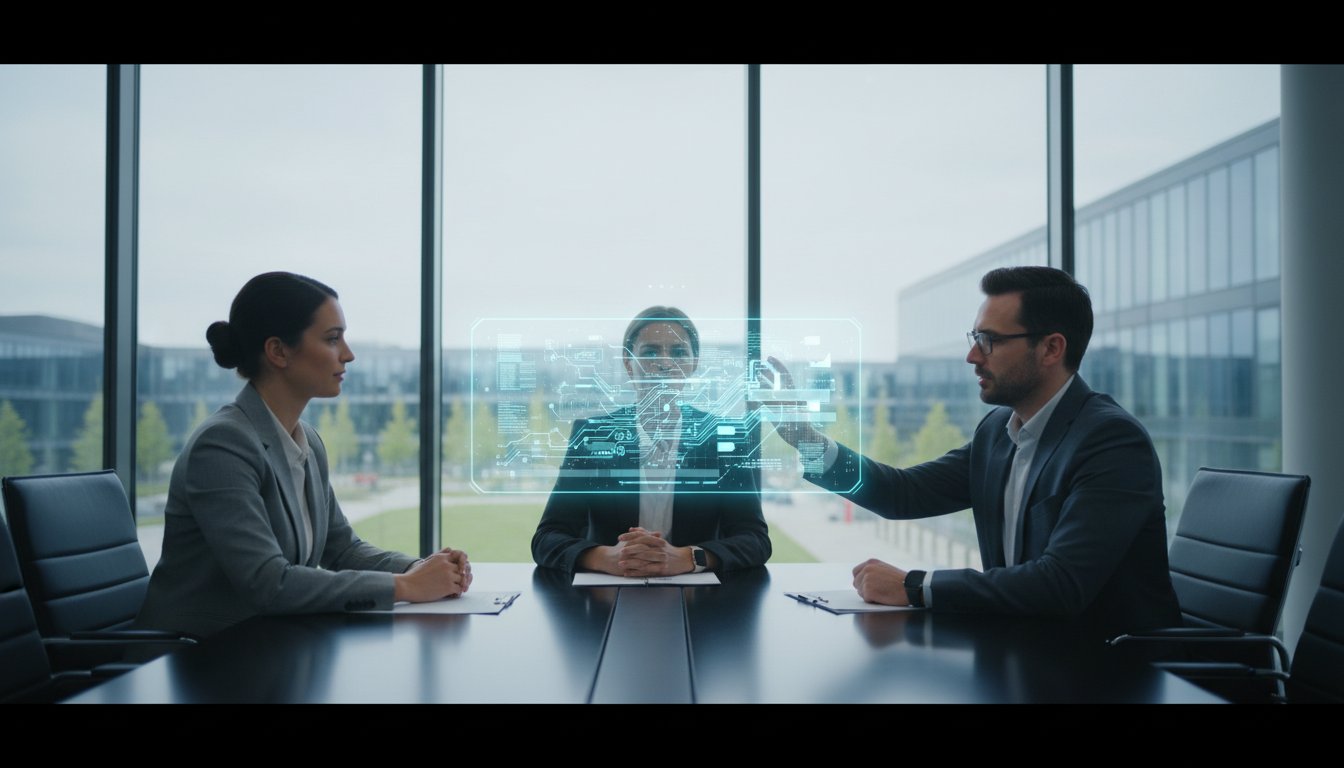
Why do 85% of enterprise AI initiatives fail to move beyond the pilot phase, while a select 12% of organizations are already realizing a 300% increase in operational efficiency? The difference isn't the size of the budget; it's the depth of the integration. Most leaders are weary of the empty promises surrounding ai-powered tools that offer little more than surface-level automation. You're likely frustrated by the gap between technical potential and actual bottom-line impact. It's time to move past the buzzwords and focus on structural enterprise change.
This 2026 strategic case study provides a clear framework for identifying high-value opportunities within your existing infrastructure. We'll show you how to move from basic task automation to autonomous, agentic workflows that drive measurable ROI. You'll gain a comprehensive blueprint for modernization that prioritizes human-ai synergy and long-term scalability. By the end of this analysis, you'll understand exactly how to transition your organization into a future-proof leader in intelligent automation.
Beyond the Buzzword: What 'AI-Powered' Means for Global Enterprises in 2026
By 2026, the distinction between a tech-forward company and a legacy firm rests on a single architectural choice. True enterprise transformation requires moving beyond superficial integrations. To grasp what 'AI-Powered' means in this era, one must view it as a core architectural philosophy rather than a functional add-on. It's the difference between a building with a smart thermostat and a structure designed from the ground up to optimize its own energy, security, and maintenance. This shift represents a fundamental change in how data flows through an organization.
In 2024, many firms were satisfied with ai-powered features that assisted human tasks. By 2026, market longevity depends on whether AI is the engine or just the sidekick. Organizations that treat AI as a core pillar see 25% faster decision cycles compared to those using isolated tools. This architectural maturity allows systems to move from passive data processing to active strategy execution.
To better understand the scale of this technological shift, watch this analysis of next-generation infrastructure:
AI-Powered vs. AI-Enabled: A Strategic Distinction
Think of an AI-enabled tool as a sidekick. It's a helper that requires constant direction and manual input to stay relevant. In contrast, an ai-powered system is the engine under the hood. AI-enabled tools often fail to scale in complex environments because they create data silos. A 2025 Gartner report highlighted that 70% of AI-enabled initiatives struggled with interoperability. Successful enterprises now rely on robust MLOps frameworks to maintain a unified, intelligent core. This ensures models remain accurate, secure, and context-aware as they scale across global operations. MLOps isn't just a technical requirement; it's the heartbeat of a sustainable digital strategy.
The Rise of the Agentic Enterprise
The pinnacle of this architecture is agentic ai. We've moved past simple conversational interfaces that only answer questions. Modern workflows now utilize autonomous execution agents that handle entire sequences of tasks across disparate platforms. This marks the transition from 'Human-in-the-loop' to 'Human-on-the-loop.' In this model, the AI executes complex processes while humans provide high-level oversight and strategic direction. By removing the burden of repetitive cognitive tasks, enterprises reduce operational costs by an average of 18% based on 2025 industry benchmarks. This synergy allows the workforce to focus on high-value creative work and strategic innovation, securing the company's future in a high-velocity market.
This principle extends to specialized domains like content creation, where AI platforms can automate entire editorial workflows, from research to publication. To see how this works in practice, you can discover Editivo.
In the real estate sector, Homeselling AI provides a similar level of efficiency through its Scientific Home Selling System, a data-driven framework designed to optimize the property sales process.
Similarly, the luxury retail sector is seeing a shift toward digital-first identities, with brands like IHNI leading the way in modern streetwear aesthetics for the global market.
The Architectural Shift: Comparing Passive and AI-Powered Workflows
Legacy enterprise systems operate on rigid, pre-defined logic. These passive workflows follow "if-then" sequences that break the moment they encounter a variable outside their narrow programming. An ai-powered architecture functions differently. It replaces static scripts with dynamic neural networks capable of interpreting context and intent. This transition isn't merely a software update. It's a fundamental restructuring of how information moves through your organization. The goal is to move beyond simple task execution toward a system that understands the objective behind the task.
Data Engineering as the Foundation
Your intelligence strategy is only as robust as your underlying data pipeline. Passive systems often ignore unstructured data, which accounts for nearly 80% of all corporate information. To harness this, enterprises must prioritize advanced data engineering to transform raw documents, emails, and sensor logs into vectorized formats. Effective pipelines now handle high-volume, multi-format document extraction at a scale that was impossible in 2023. By automating the ingestion of complex datasets, businesses eliminate the manual bottlenecks that typically stall digital transformation. It's about moving from data collection to data readiness.
From Cloud-Native to Intelligent Automation
Modernization is the prerequisite for agentic intelligence. Moving to a cloud-native environment isn't just about reducing server costs; it's about creating a playground for autonomous agents. These agents require the elastic compute power and low-latency storage that only modern cloud architectures provide. When you align your infrastructure with a comprehensive enterprise AI strategic plan, you ensure that governance and scalability are baked into the system from day one. This synergy between server intelligence and cloud infrastructure allows for ai-powered refactoring, which systematically reduces technical debt by optimizing code in real-time. It's a self-healing approach to enterprise IT that ensures long-term stability.
The scalability of these models far exceeds traditional rule-based software. While manual code becomes more fragile as it grows, AI systems become more resilient as they ingest more data. This creates a flywheel effect where the system's accuracy and speed improve alongside the business's growth. Organizations implementing these intelligent frameworks often see a 40% reduction in operational friction within the first twelve months. This creates a sustainable competitive advantage that passive systems simply can't replicate. If you're ready to evaluate your current stack, our team can provide a tailored assessment through our consulting services to map your path toward architectural excellence.
Case Study: Transforming Unstructured Data with AI-Powered IDP
Global finance and logistics sectors face a silent crisis of inefficiency. Manual document processing currently drains up to 20% of operational capacity in large-scale enterprises. For a Tier-1 logistics provider in 2025, managing 50,000 bills of lading every month required a dedicated team of 40 specialists just to verify data. This creates a ceiling on growth. When humans spend their days transcribing data from PDFs into ERP systems, they aren't performing the high-value analysis that drives revenue. This bottleneck is a structural failure that requires a sophisticated architectural solution.
The Legacy Challenge: Fragmented Document Workflows
Legacy OCR solutions are brittle. They rely on rigid templates that break when a vendor moves a logo or changes a font size. This lack of context forces employees into "stare and compare" loops, where they manually check digital extracts against physical images. It's a slow, error-prone process that can't scale during peak seasons. Modern enterprises can't afford these delays. The strategic need for a unified intelligent document processing platform has moved from a luxury to a baseline requirement for operational excellence.
The AI-Powered Solution: i_Nova in Action
The i_Nova platform solves this by moving beyond simple character recognition. It functions as an ai-powered engine that understands document intent. By integrating RAG AI, the platform provides contextual intelligence that basic tools lack. It doesn't just see a date; it understands if that date refers to a shipping deadline or a payment term by cross-referencing internal contract logic. Large organizations often consult a formal AI implementation guide to structure this shift, ensuring their workforce is ready for the transition to autonomous agents.
These agents handle exceptions without human intervention. If a multi-page invoice arrives with a missing tax ID, the agent doesn't just flag it. It searches the vendor database, retrieves the missing information, and completes the record. This creates a seamless flow that directly impacts customer experience. Onboarding that once took three days now happens in minutes. Real-time response capabilities allow the enterprise to move at the speed of the market, rather than the speed of a data entry clerk.
The results from recent ai-powered deployments are definitive and measurable:
85% reduction
in total document processing time, allowing teams to focus on strategic exceptions.
99.9% accuracy
across complex, unstructured, and multi-page formats.
Significant reduction
in overhead costs by eliminating the need for third-party manual data entry services.
Enhanced scalability
that allows a 300% increase in document volume without adding new headcount.
This isn't just about saving time. It's about future-proofing the enterprise. By removing the friction of unstructured data, i_Nova allows leadership to focus on high-level strategy while the autonomous engine maintains the integrity of the data pipeline. This synergy between human insight and machine precision is the new standard for global operations.
Building the Engine: A Strategic Roadmap for AI-Powered Modernization
Modernizing an enterprise requires a structured blueprint that moves beyond experimental sandboxes into scalable production. Success in an ai-powered environment depends on a sequence of deliberate actions designed to minimize technical debt and maximize operational excellence. This isn't about incremental change; it's about re-architecting how value is created and delivered.
Follow this five-step roadmap to build your engine:
Step 1: AI Readiness Audit.
Inventory your data silos and identify high-impact automation candidates where latency or manual error currently limits growth.
Step 2: Strategy Development.
Craft a bespoke generative ai strategy that shifts focus from simple conversational tools to autonomous, agentic workflows.
Step 3: Governance Framework.
Deploy GRC protocols to ensure every autonomous decision remains transparent and compliant.
Step 4: Proof-of-Value (PoV).
Validate ROI through 90-day pilot programs before committing to full-scale deployment.
Step 5: MLOps Integration.
Implement continuous monitoring and model optimization to maintain accuracy as market conditions shift.
Defining Your Enterprise AI Strategy
Strategic alignment is the difference between a high-cost hobby and a revenue-generating asset. Your AI initiatives must map directly to core business drivers such as customer lifetime value or supply chain resilience. Engaging in ai strategy consulting helps leadership teams avoid the trap of chasing generic solutions that fail to integrate with legacy infrastructure. By designing for the agentic frontier of 2027, you ensure your architecture supports the next generation of autonomous systems without requiring a total rebuild. This forward-looking approach secures your position as a market leader rather than a late adopter.
Governance, Risk, and Compliance (GRC)
Trust is the primary currency of the 2026 digital economy. Managing an ai-powered enterprise requires strict adherence to GDPR and SOC2 standards to protect sensitive data and maintain stakeholder confidence. Version control for autonomous systems isn't optional; it's a requirement for auditability. We focus on Human-AI Synergy, where your workforce is trained to partner with agentic systems rather than compete with them. This collaborative approach turns risk management into a competitive advantage by ensuring human oversight remains at the center of every automated process. It's about building systems that are both innovative and dependable.
The Future of AI-Powered Synergy: Partnering with IntellifyAi
IntellifyAi functions as the Strategic Architect for global enterprises ready to move beyond the experimental phase of digital adoption. The transition to an ai-powered infrastructure requires more than a standard software subscription. It demands a fundamental redesign of how data moves and how decisions are made. We focus on Agentic AI Engineering to ensure that machine learning isn't just a peripheral tool but a central nervous system for your business. Our methodology bridges the gap between high-level executive strategy and the granular technical execution required for success.
We prioritize practical, scalable results over abstract promises. By focusing on workflow orchestration and operational excellence, we turn complex algorithms into measurable ROI. Our team understands that for a serious enterprise, stability is as important as innovation. We build systems that are innovative enough to lead the market yet dependable enough to support mission-critical operations. This approach creates a seamless path from legacy systems to a future defined by Human-AI Synergy.
Bespoke Engineering for Complex Challenges
Off-the-shelf software rarely survives the complexity of a global enterprise. Standardized solutions often create more friction than they solve because they don't account for unique data silos or specific regulatory requirements. We provide custom AI engineering that integrates directly into your existing stack. Our focus on cloud-native modernization and data orchestration ensures that your infrastructure is ready for the demands of 2026 and beyond. We build for scalability from day one.
The impact of this bespoke approach is evident in our recent deployments. Our voice agents are currently redefining customer experience for major logistics firms. By implementing these autonomous agents, our partners achieved a 28% reduction in operational overhead within the first six months of 2025. These aren't just chatbots; they're intelligent entities capable of resolving complex inquiries without human intervention. This allows your human talent to focus on high-value creative work while the ai-powered systems handle the repetitive volume.
Your Journey to Intelligent Automation Starts Here
The journey toward full digital transformation requires a sense of professional optimism. It's an opportunity to future-proof your organization and unlock human potential. We don't view AI as a replacement for labor, but as a liberating force that removes the burden of mundane tasks. This philosophy of Intelligent Automation ensures that your business remains relevant in an increasingly automated economy. It's a long-term investment in your company's agility and market position.
Starting this transformation doesn't have to be a daunting task. We begin every partnership with a detailed strategic consultation to map out your specific needs and opportunities. We identify the bottlenecks that hinder your growth and design the technical solutions to eliminate them. The goal is a frictionless, automated future where your operations run with high-velocity precision. Contact IntellifyAi today to architect your AI-powered future.
Master Your Autonomous Evolution
Secure your competitive advantage by 2026. The divide between market leaders and laggards will be defined by the ability to transition from passive systems to active orchestration. You've seen how intelligent architectures replace stagnant processes with dynamic results. Global enterprises are already utilizing the i_Nova platform to convert unstructured data into strategic assets. This isn't just a technical upgrade; it's a fundamental shift toward Agentic AI and Intelligent Automation that prioritizes high-value human creativity. Intellify AI brings this vision to life through a global network spanning the UK, USA, India, and the UAE. We provide the technical depth and strategic foresight required to navigate this complex landscape. Your organization's roadmap must prioritize scalability and ROI to remain relevant in a market projected to reach $25 billion by 2027. Partnering with a Strategic Architect ensures your deployment is both innovative and dependable. It's time to build a resilient foundation that turns technological potential into measurable business impact. You're ready to lead the next era of industry innovation.
Architect your enterprise's AI-powered future with IntellifyAi's strategic consulting.
Frequently Asked Questions
What is the difference between AI-powered and AI-driven?
AI-powered systems focus on augmenting existing human workflows, whereas AI-driven organizations use technology to dictate their primary strategic decisions. An ai-powered architecture emphasizes human-AI synergy to increase individual productivity. According to a 2024 Gartner report, 40% of enterprises now prioritize this augmentation over full automation. This distinction ensures your human experts remain central to the strategic loop while technology handles repetitive, data-heavy tasks.
How do I determine if my enterprise is ready for an AI-powered transformation?
Evaluate your data maturity and infrastructure scalability to determine your readiness for a large-scale transition. A 2025 McKinsey study found that 70% of successful transformations began with a centralized data lake and clear governance protocols. You've reached the threshold if your legacy systems support API-first integrations and your teams spend 30% of their time on manual data entry. Start with a pilot program to validate your technical foundation.
What are the core components of an AI-powered architecture?
A high-performance ai-powered architecture consists of a unified data layer, scalable compute resources, and a modular orchestration engine. These components work together to process unstructured data and deliver actionable insights in real-time. In 2024, IDC reported that 65% of high-performing firms use a microservices approach to maintain agility. This structure allows you to swap models or update algorithms without disrupting your entire operational ecosystem or causing significant downtime.
Can AI-powered systems integrate with my existing legacy software?
What is the ROI of switching to an AI-powered Intelligent Document Processing (IDP) platform?
Switching to an Intelligent Document Processing (IDP) platform typically delivers a 300% return on investment within 18 months of deployment. This ROI stems from reducing manual processing costs by 80% and improving data accuracy to 99.9%. According to 2024 industry benchmarks from Everest Group, firms also experience a 4x increase in document throughput. These measurable gains allow your staff to focus on strategic analysis rather than rote administrative tasks.
How does Agentic AI improve the capabilities of AI-powered workflows?
Agentic AI enhances workflows by introducing autonomous reasoning and the ability to execute multi-step tasks without constant human oversight. Unlike traditional bots, these agents adjust their behavior based on changing environmental variables. A 2025 report by Forrester suggests that agentic systems can reduce workflow cycle times by 60%. This shift transforms your technology from a passive tool into a proactive partner that contributes to your overall operational excellence.
What are the security risks associated with AI-powered automation?
Data leakage and prompt injection are the most critical security risks associated with automated intelligent systems. The 2024 IBM Cost of a Data Breach Report highlighted that AI-related vulnerabilities contributed to a 10% increase in breach costs for unprepared firms. You must implement robust encryption and strict access controls to mitigate these threats. Regular red-teaming and automated monitoring ensure your systems remain secure against evolving cyber threats and unauthorized access.
How do I choose the right AI strategy consultant for my business?
Identify a partner who balances high-level strategic vision with a demonstrated history of technical execution and measurable ROI. Look for consultants who prioritize future-proofing and offer a clear roadmap for long-term scalability. A 2024 survey of CTOs found that 85% value technical execution over theoretical strategy. Your chosen partner should act as a strategic architect; they'll guide your enterprise through the complexities of digital transformation with precision and reliability.









.svg)